

The fashion world eagerly anticipated Pierpaolo Piccioli’s inaugural couture collection for Balenciaga. In Paris’s Cité Internationale Universitaire, the designer presented a debut that not only marked a new chapter in the French House’s history but also offered a fresh perspective on haute couture. Instead of theatrical couture solely for the runway, Piccioli showcased pieces where exceptional haute couture craftsmanship merged with ease, freedom of movement, and real life. “Haute couture has for too long been associated with something distant from reality. Today, true modernity is linked to people’s lives, to their everyday experiences. I like the idea of creating garments that remain couture in essence, yet can also exist in daily life,” the designer explained.
Advertising.
While Balenciaga was previously associated primarily with dramatic volumes, total black, and almost architectural silhouettes, Piccioli offered a different interpretation of the House’s legacy. The central theme became lightness, freedom of movement, and the natural connection of clothing to the body.
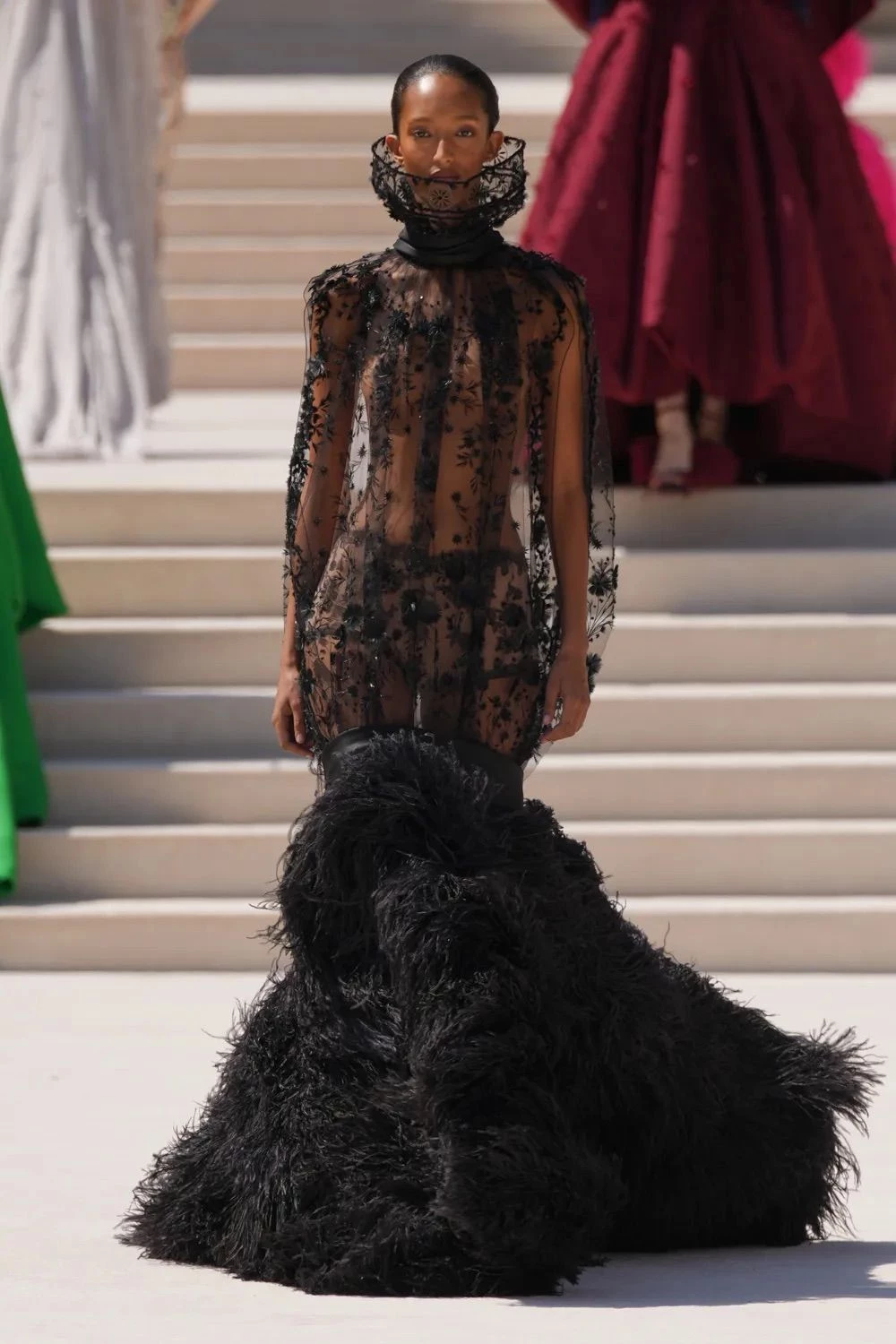
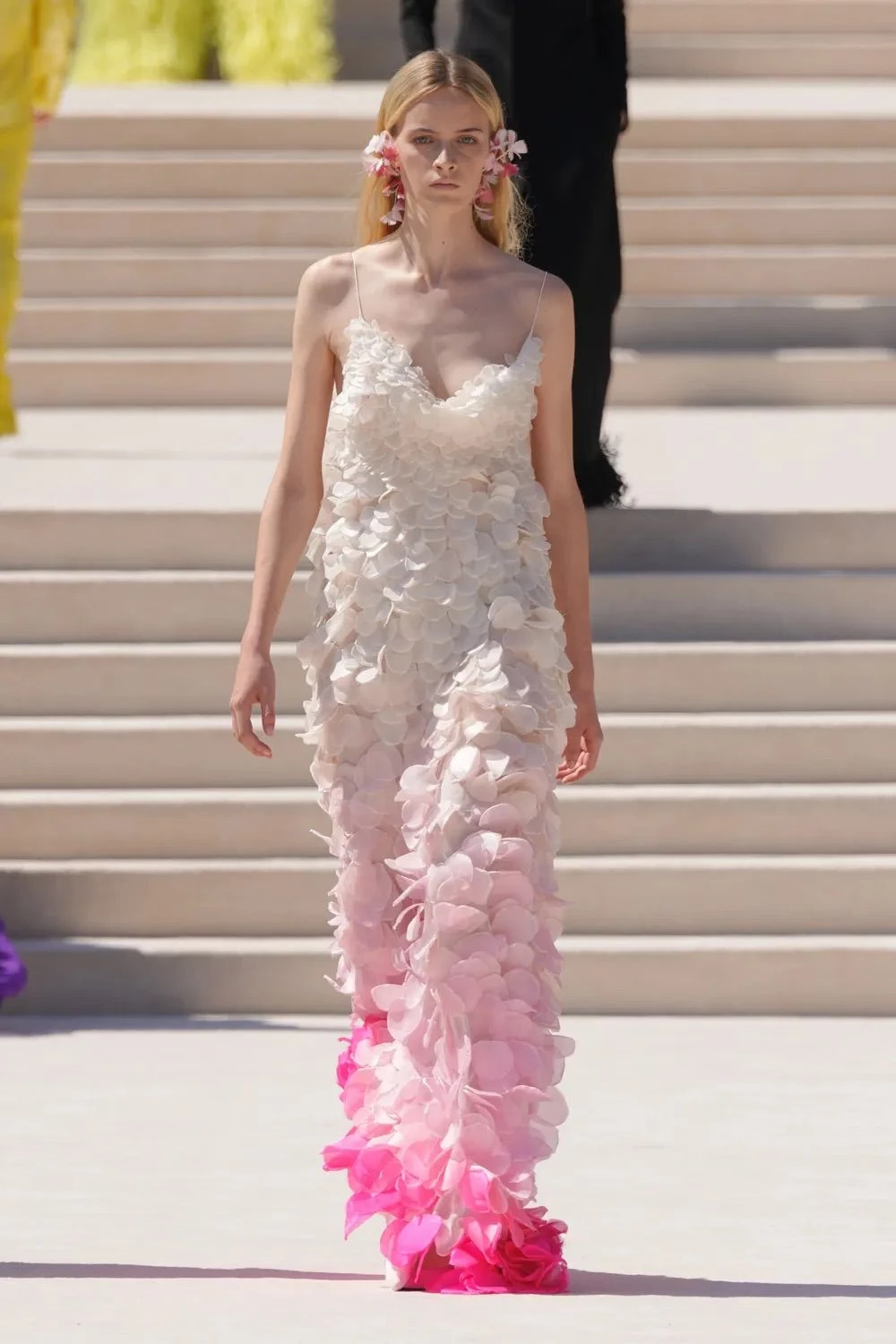
The new Balenciaga couture blends effortlessness with luxury. Voluminous silhouettes coexist with pieces that could easily be imagined in an everyday wardrobe. Strict tailoring intertwines with transparent fabrics, soft textures, and fluid shapes, with comfort emerging as the ultimate luxury.
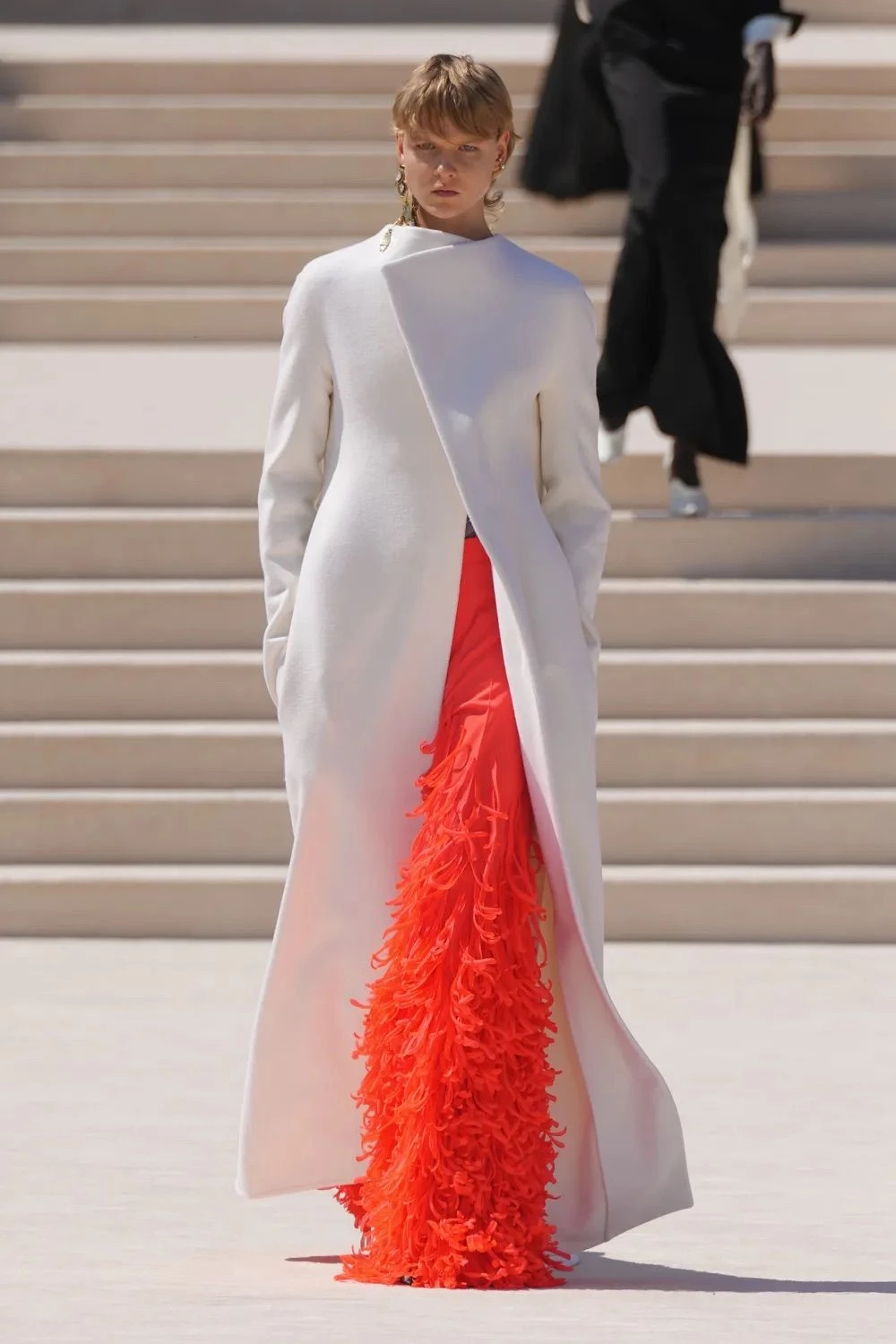
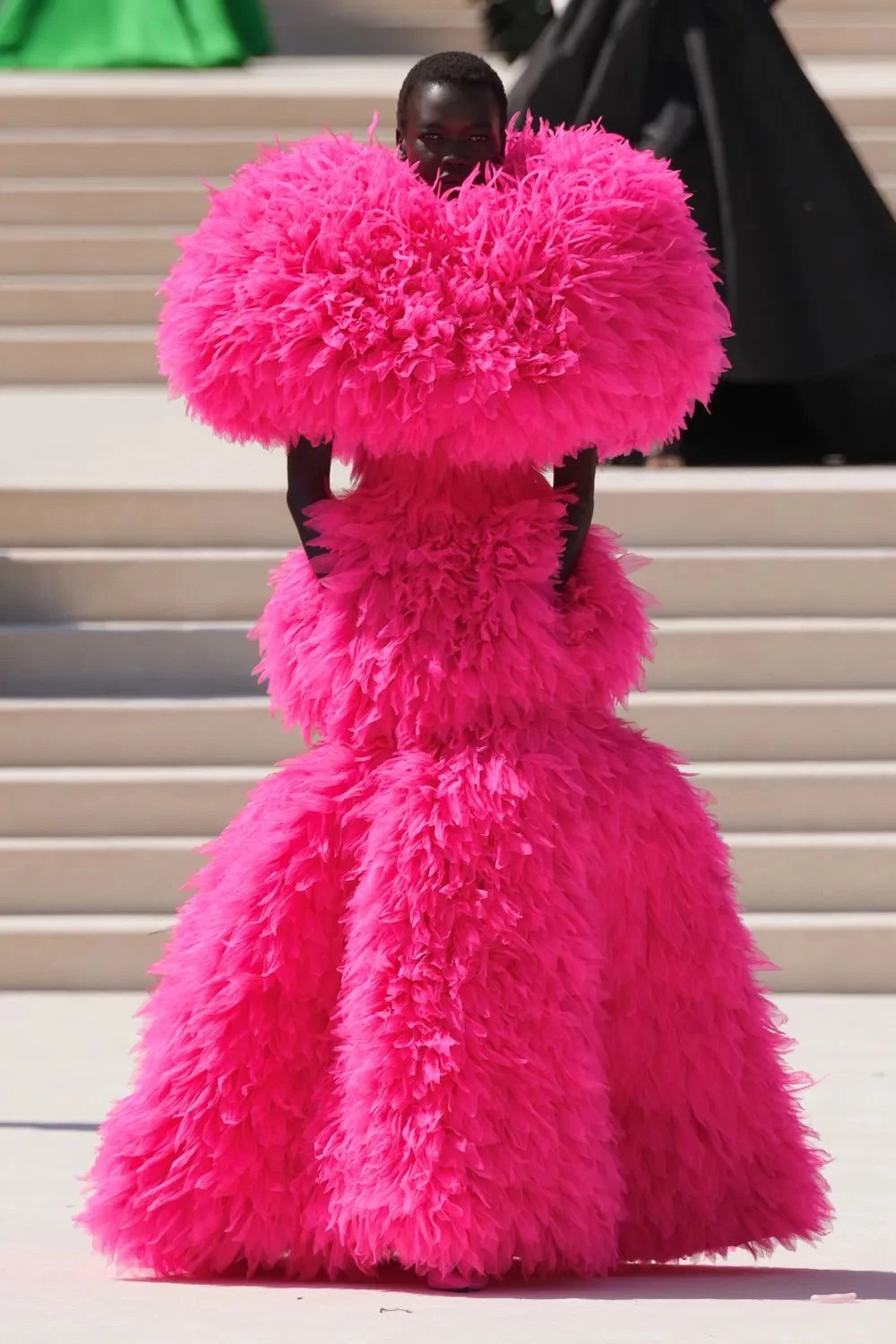
One of the most striking looks from the show was a long, ivory coat paired with orange trousers embroidered with organza petals. Equally spectacular was Gigi Hadid’s appearance, walking the runway in a sculptural bustier entirely covered in feathers. The ensemble, created in collaboration with legendary milliner Philip Treacy, literally blurred the line between clothing and the art of hat-making.
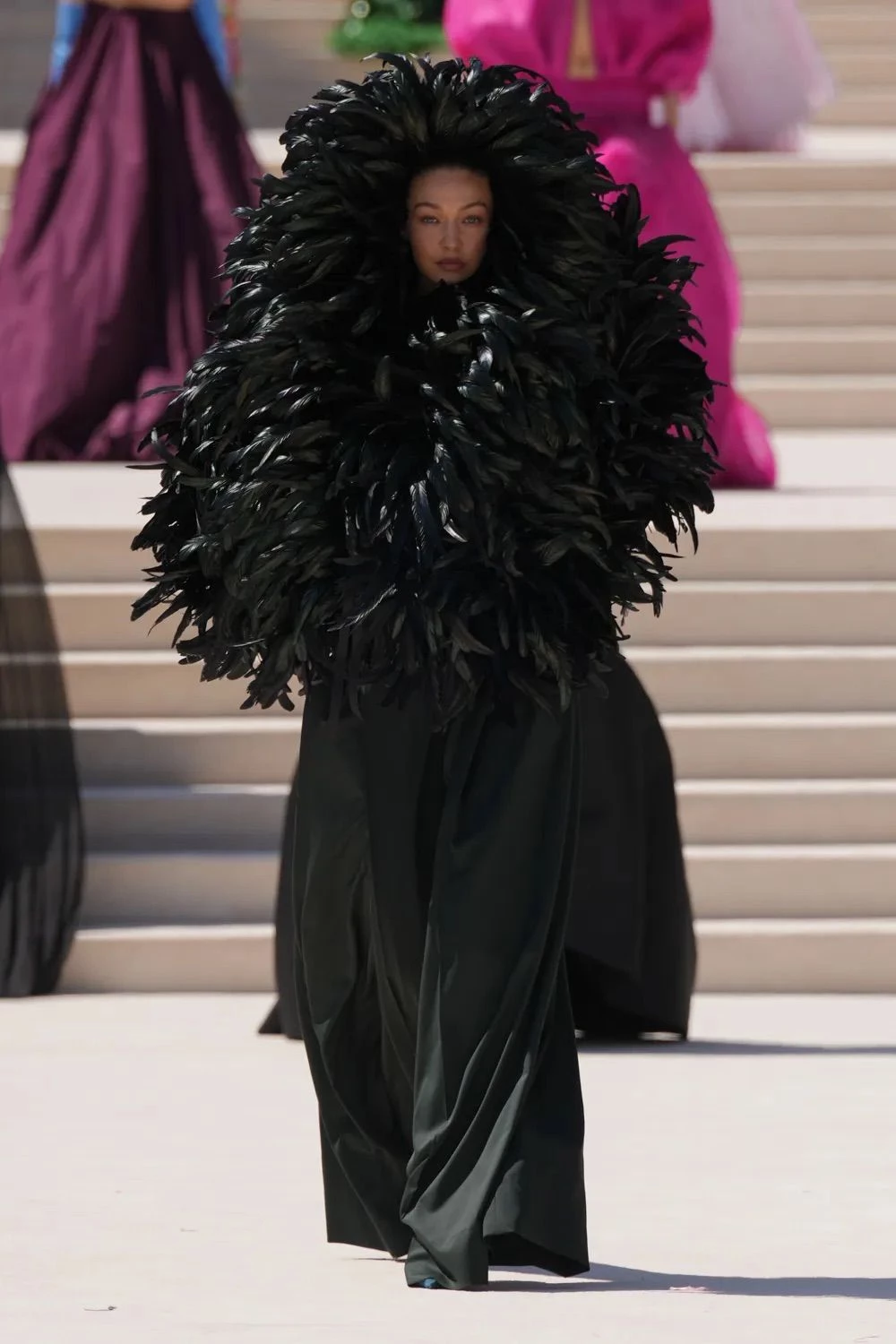
One of the most innovative aspects of the collection was the technology used to create cashmere coats and dresses through 3D body scanning. Designers first scan a model’s figure, then create a three-dimensional template of the future silhouette. If a client wishes to order a piece, their body is scanned, and the construction is adapted to their individual proportions. The form is then 3D-printed from resin and used as a personalized mannequin.
In this way, Balenciaga combines digital technologies, traditional tailoring, and the art of haute couture, effectively establishing a new standard for bespoke couture.
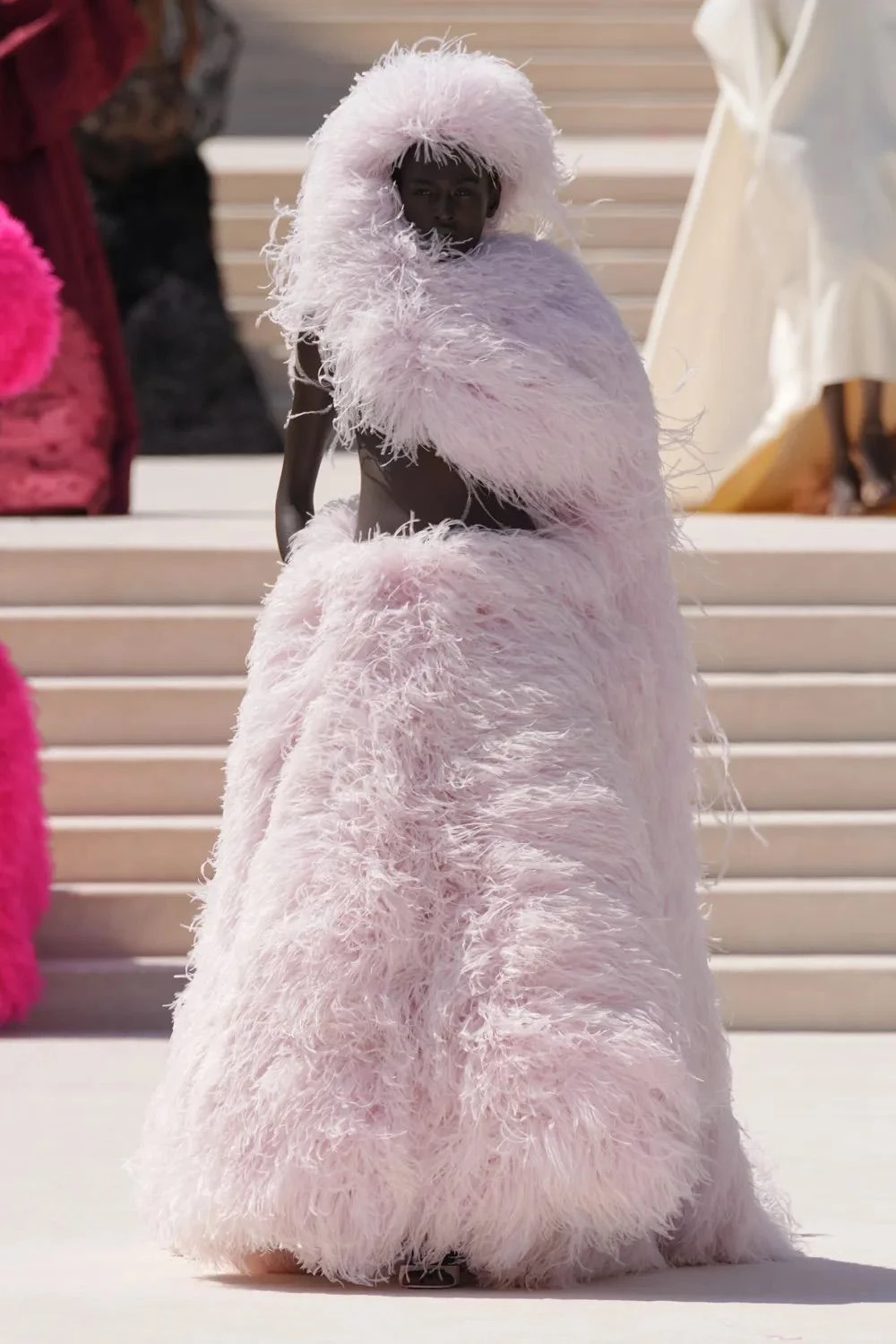
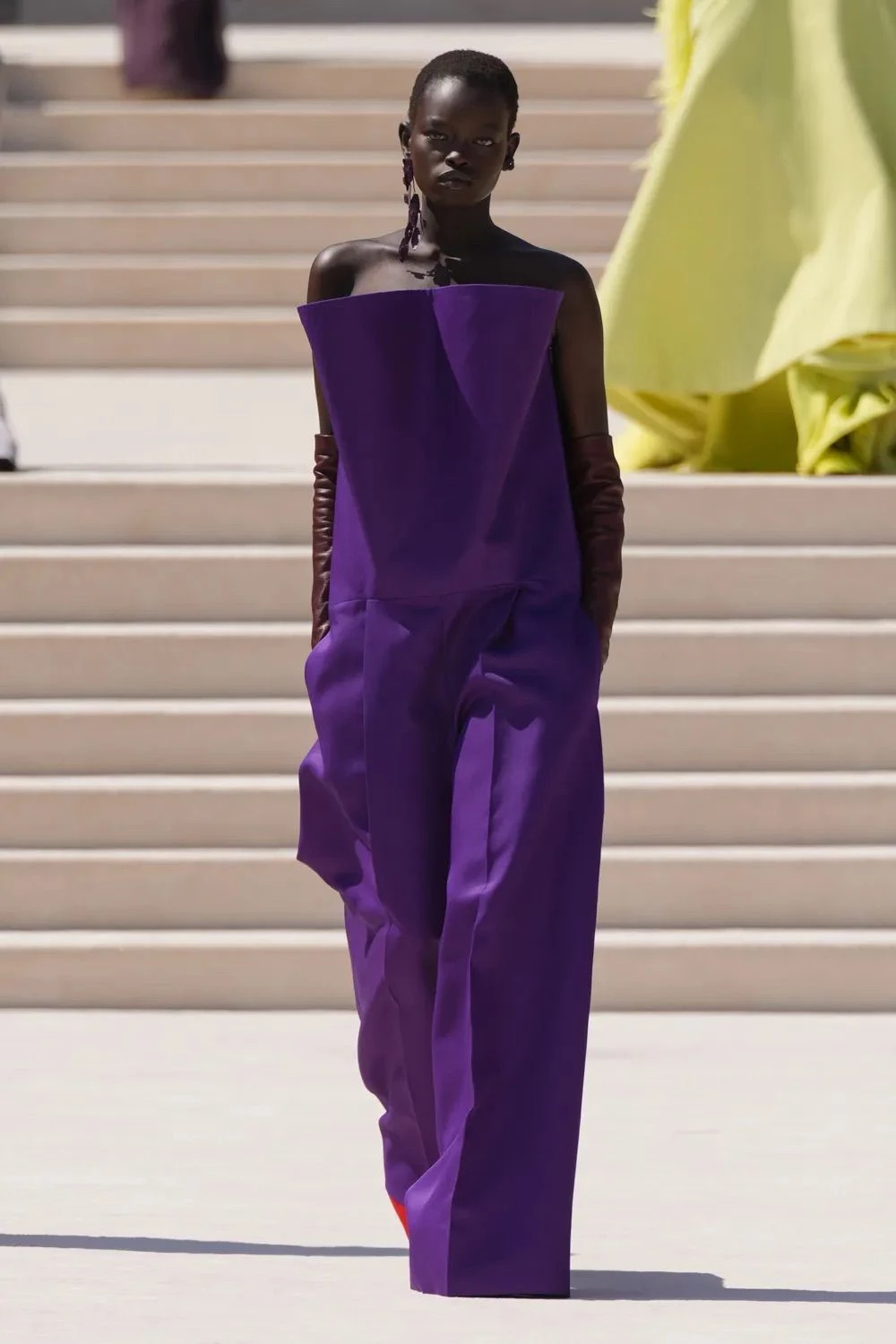
The collection also features the debut of Amsilk, an innovative, renewable material with a silky texture, whose production is independent of fossil fuels. Piccioli also continued to work with neo-gazar, a modern interpretation of the iconic fabric created by Cristóbal Balenciaga himself. This material shapes the architectural silhouettes of the new collection, combining lightness with complex construction. The designer also reinterpreted the iconic City Bag, which he had already reintroduced in the Spring-Summer 2026 collection. It now appears in a couture execution – crafted from silver metal and pink crystal mesh.
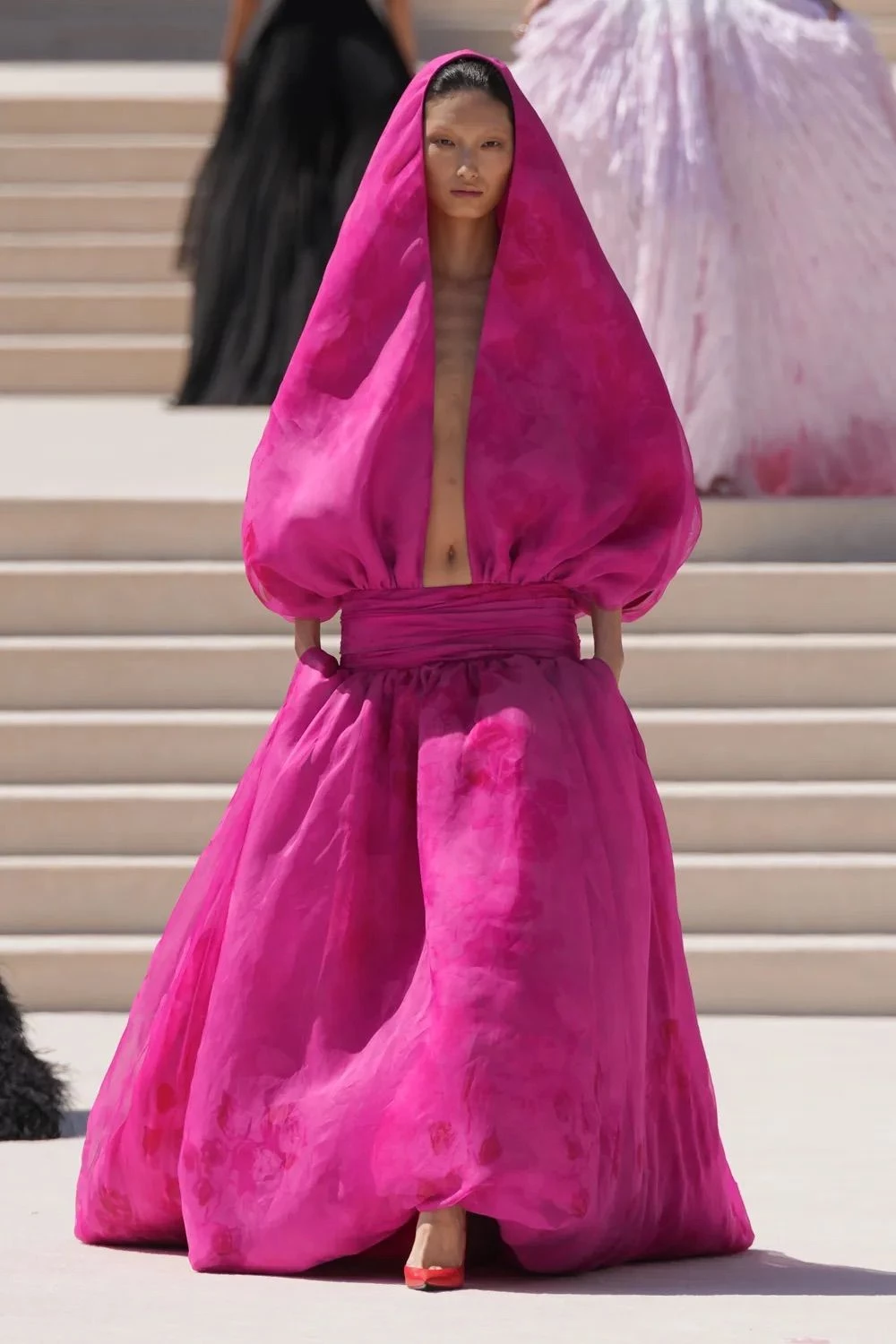
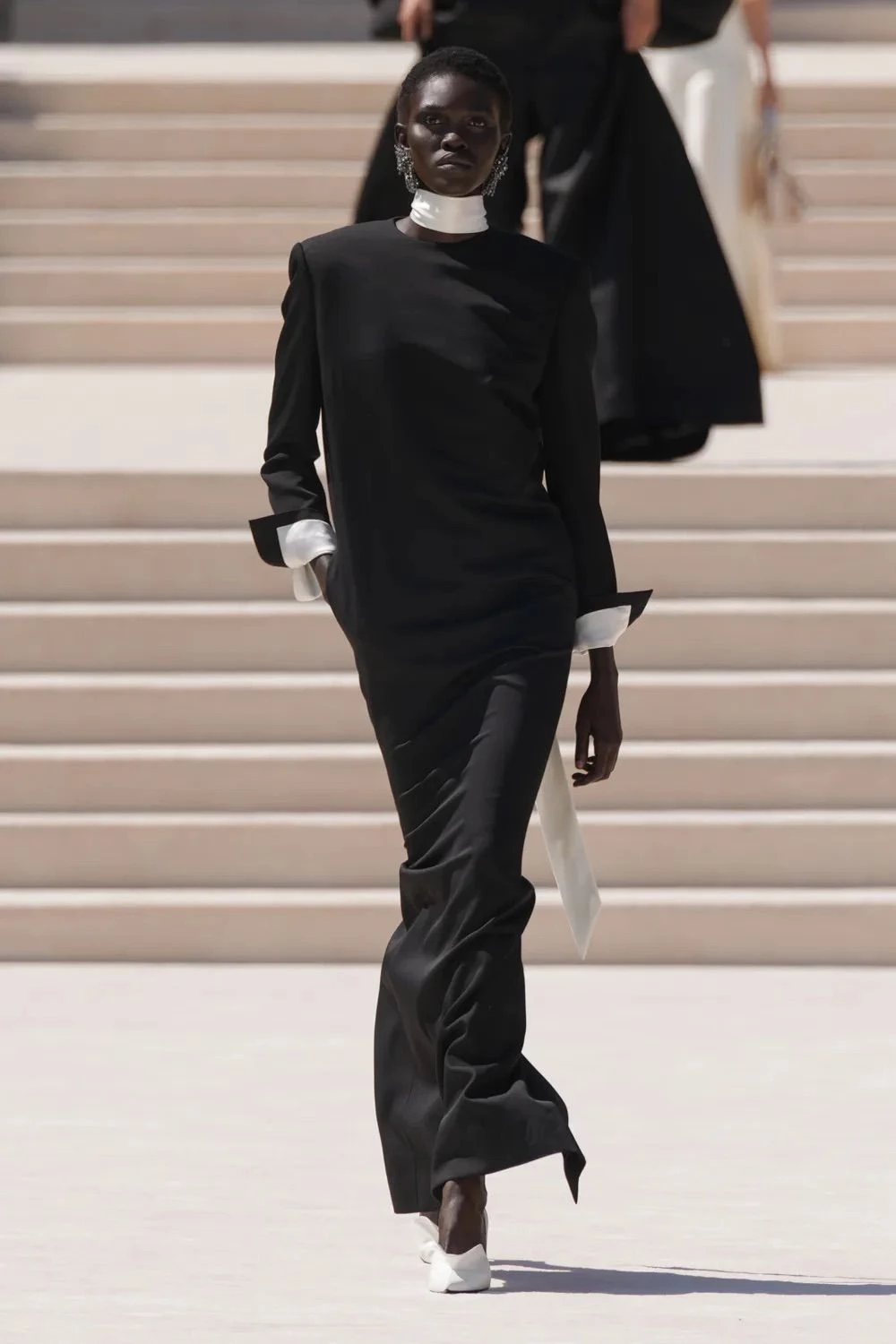
Instead of nostalgia or a literal reinterpretation of the archives, the designer proposed an entirely new vision for Balenciaga – one deeply connected to the brand’s heritage but directed towards the future. And it seems this debut has become one of the season’s most compelling couture presentations.
Based on material from vogue.fr.