

This summer, one of the simplest yet most recognizable dresses of the 1990s has unexpectedly returned to fashion – a lightweight, sleeveless model with a round neckline, known as the “three-hole dress.” What was once a staple of basic wardrobes or even associated with childhood has suddenly become an object of fashion nostalgia and a new symbol of minimalism. This silhouette, originally shaped by Helmut Lang and Calvin Klein and made iconic by Kate Moss, is reappearing on runways and in street style, proving that absolute simplicity can be the most powerful statement.
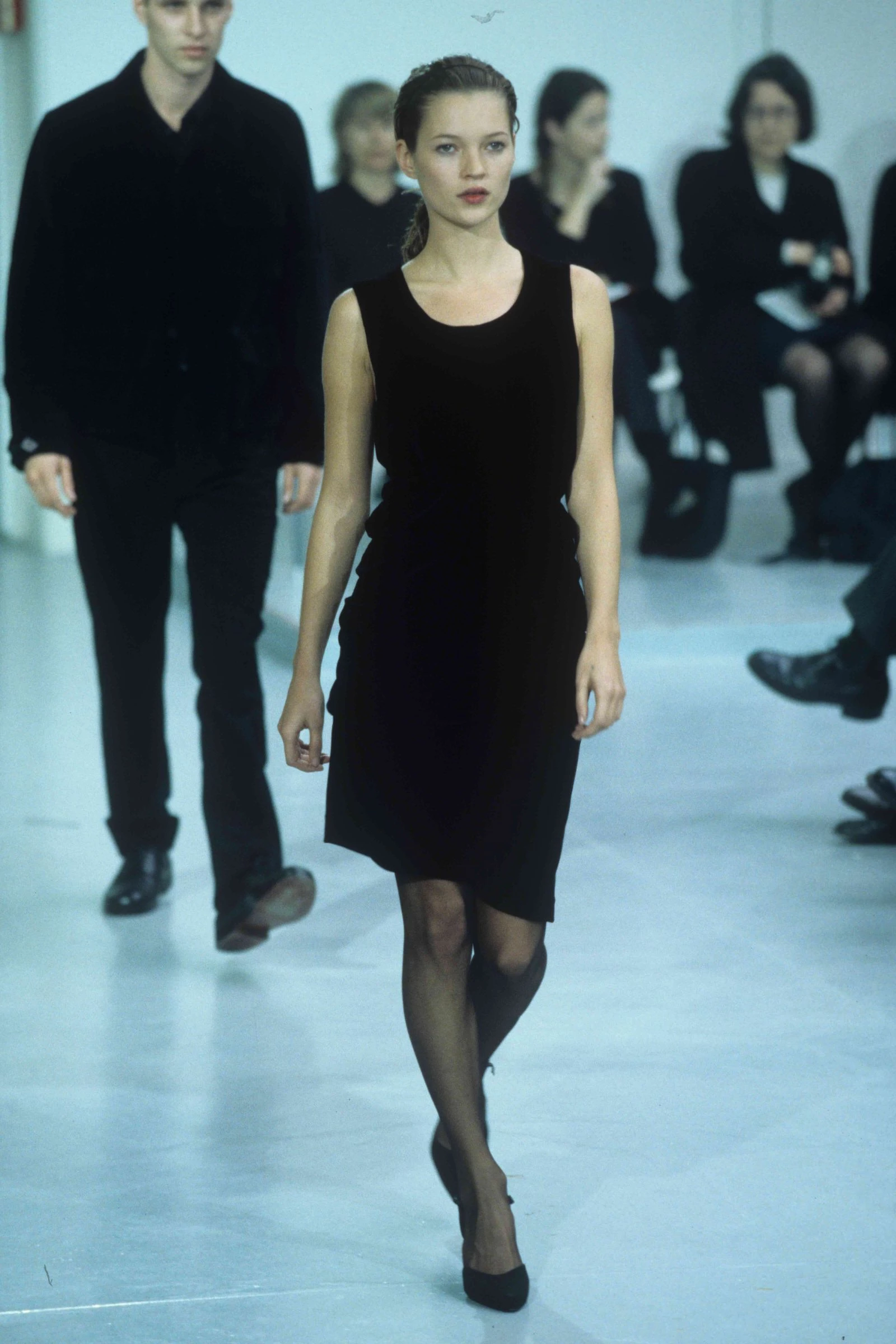 Kate Moss at the Helmut Lang show, Fall-Winter 1997/1998
Advertising.
Sundresses, silk slip dresses, and other minimalist silhouettes defined the decade’s aesthetic: clean lines, a subdued palette, and an emphasis on basic forms. It was fashion about returning to the essence of things and the power of simplicity. At the same time, the trend was supported not only by designers. Carolyn Bessette-Kennedy also became a symbol of the restrained style of the 1990s.
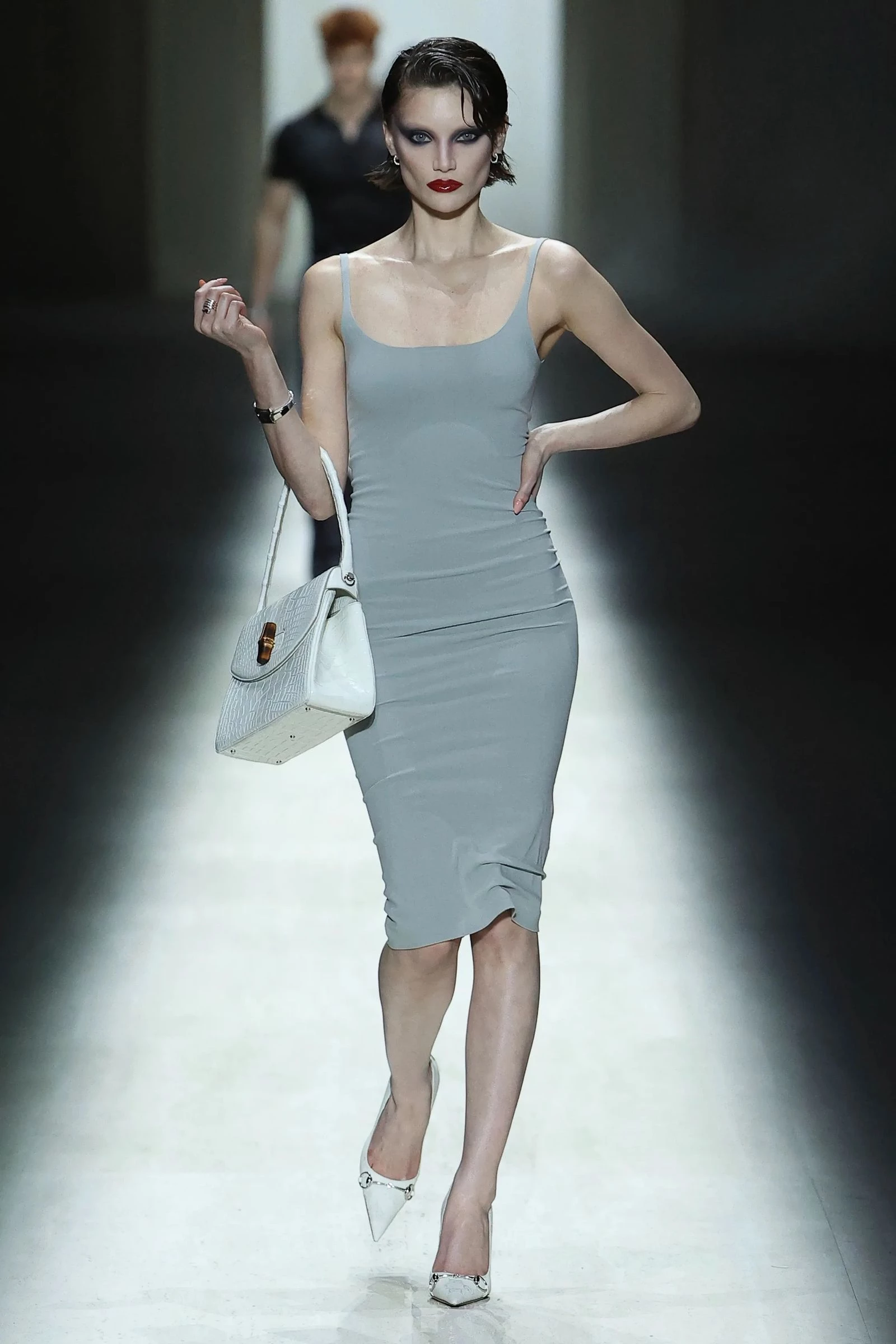 Gucci
Gucci
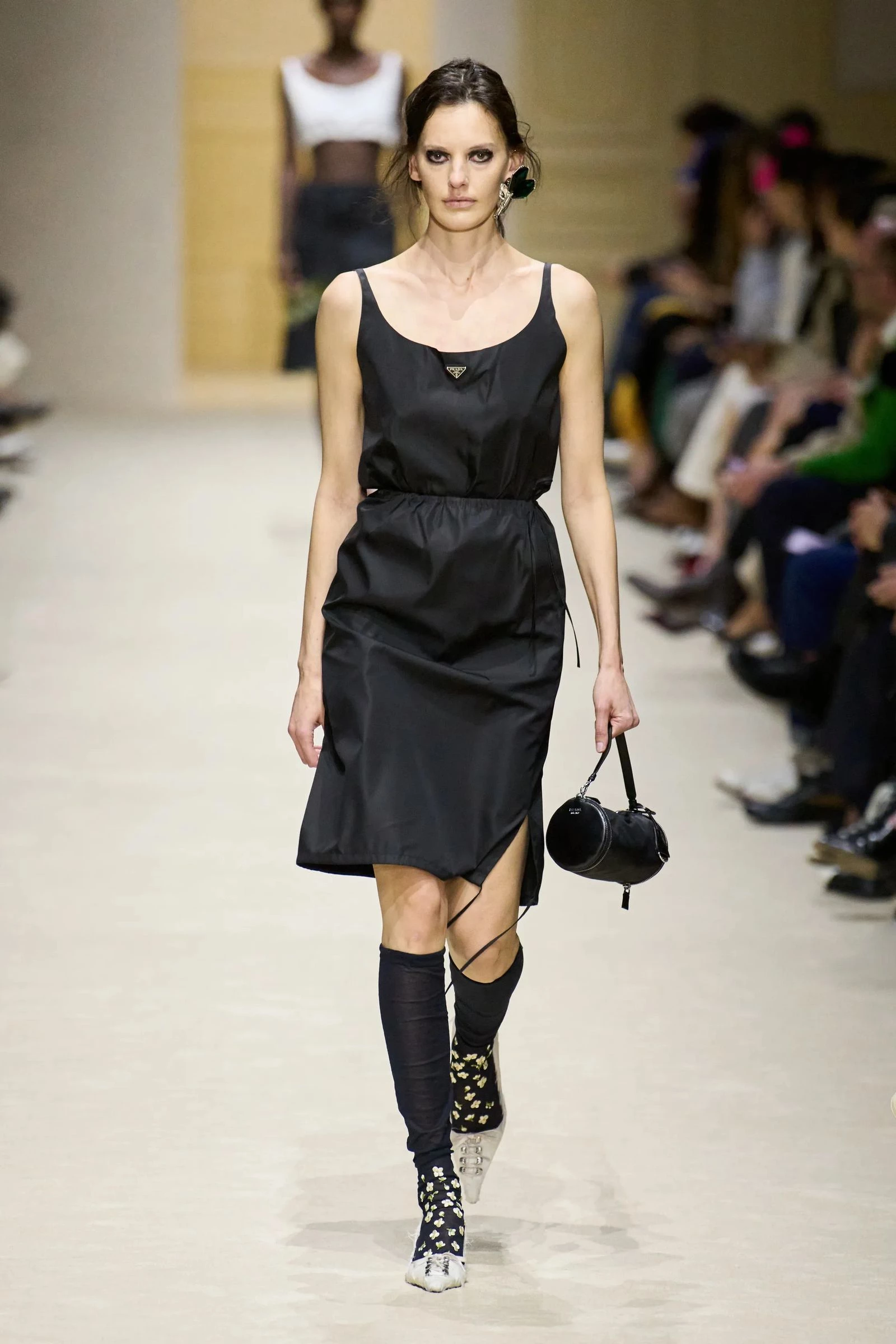 Prada
Prada
She is credited with shaping the “quiet luxury” aesthetic – restrained elegance with neutral colors, perfect silhouettes, and expensive materials. Her style was as straightforward as possible: slip dresses, pencil skirts, and, of course, the three-hole dress. One of her most famous appearances – an event at the White House in 1998 – only solidified her status as a minimalist icon.
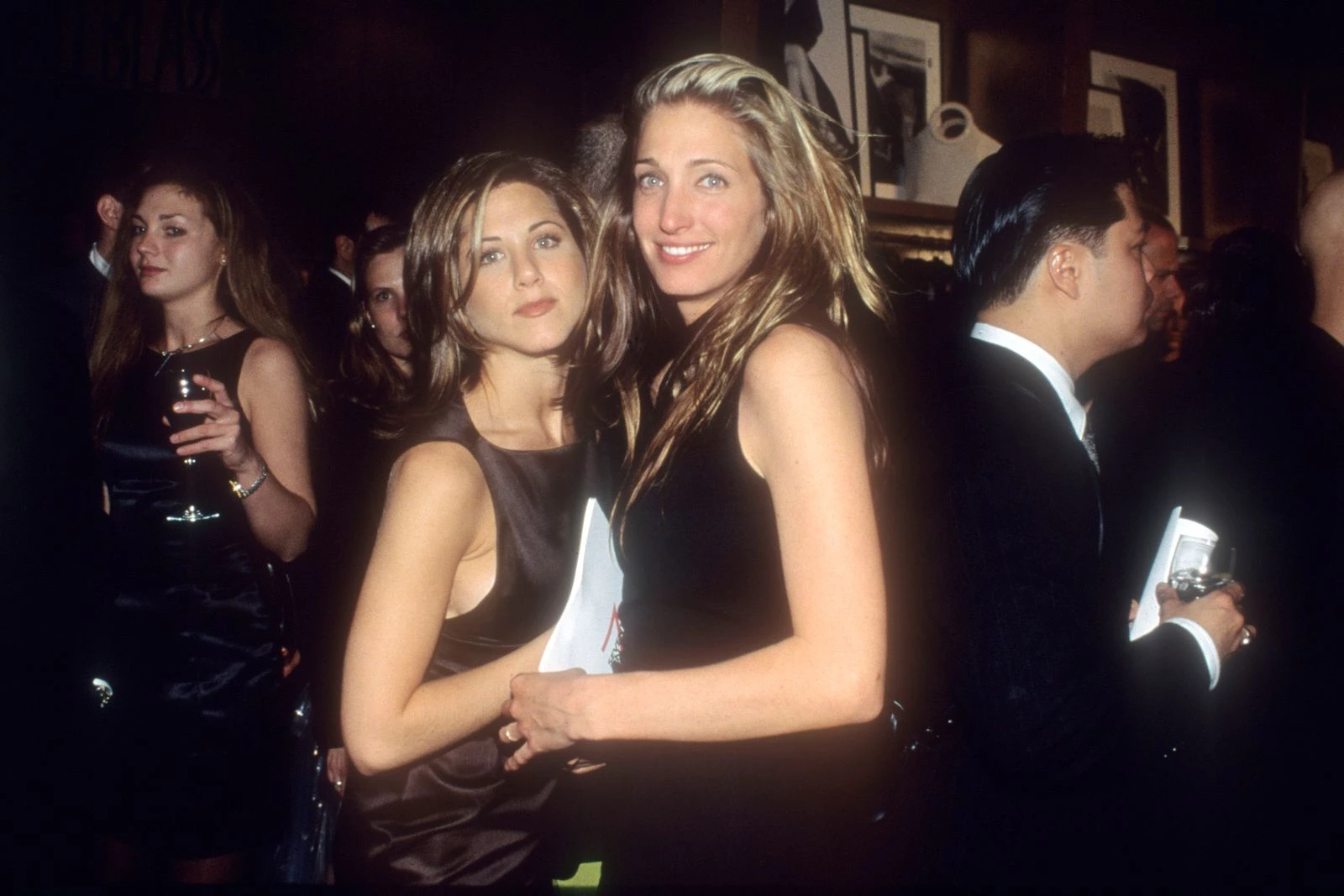 Jennifer Aniston and Carolyn Bessette-Kennedy, 1998
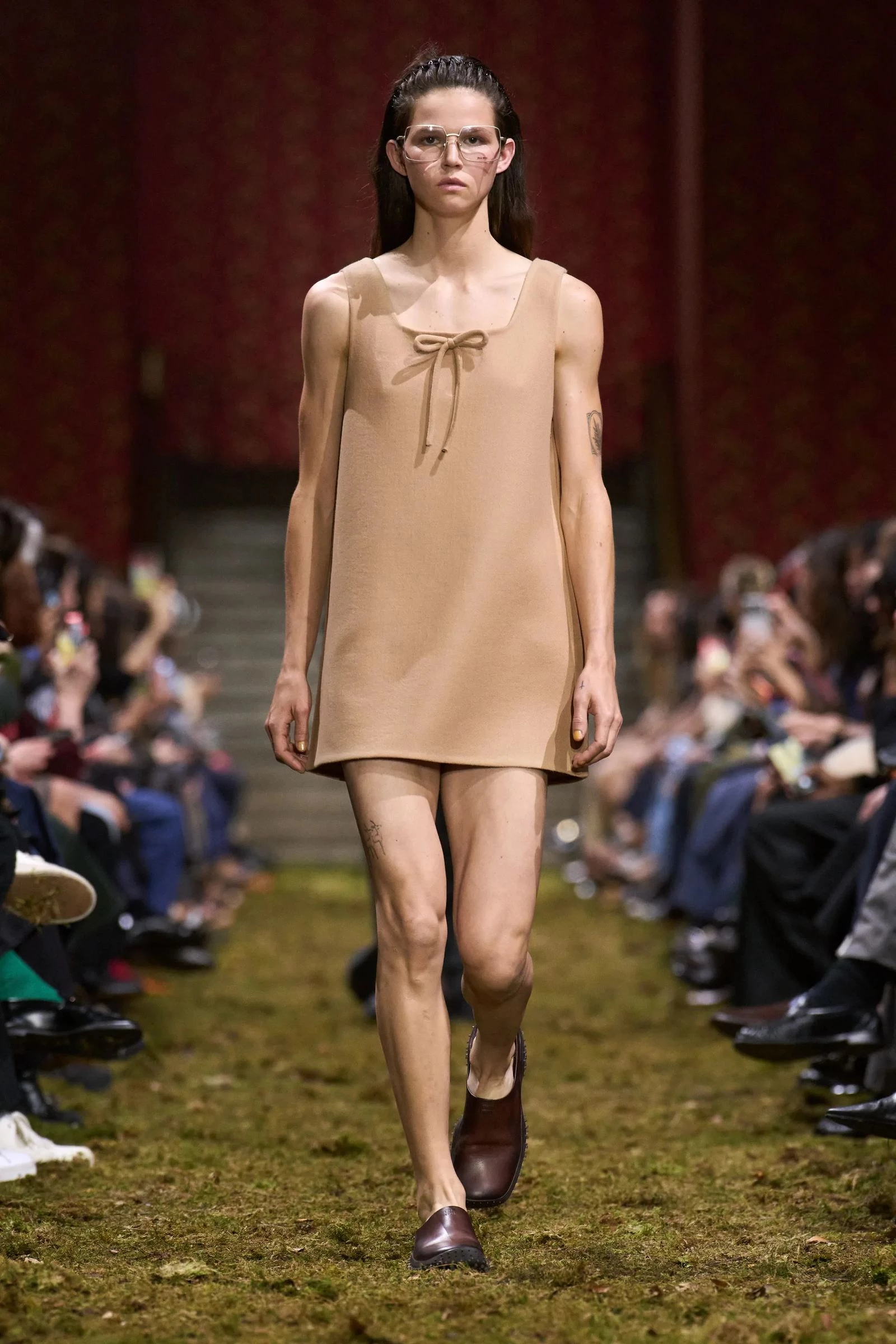
This year, the “triangular” dress can once again be seen in the collections of Gucci, where it transforms into a second skin, at Miu Miu – in an ultra-short version, and at Prada – in a technical, modern interpretation. In 2026, this dress becomes not just a trend, but a manifesto of freedom of movement and self-expression.
 Miu Miu